
From Federal Experience to Enugu Opportunity: What Chief Uche Geoffrey Nnaji’s Record Could Mean for the State
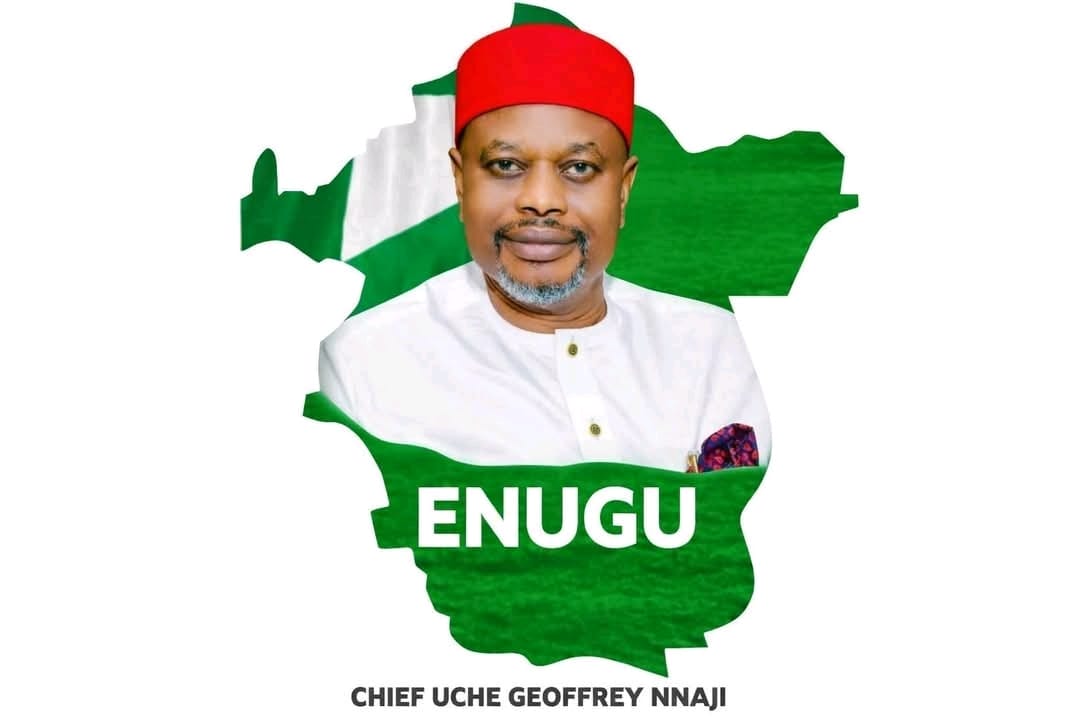
The 2027 conversation about the future leadership of Enugu State should go beyond political slogans, alliances and campaign rhetoric. It should also examine experience, exposure, capacity, policy ideas and the ability to translate opportunities into tangible development.
It is against this background that the public record and federal experience of Chief Uche Geoffrey Nnaji deserve attention.
As a former Minister of Innovation, Science and Technology, Nnaji operated within a portfolio connected to some of the issues increasingly shaping modern economies: technology, scientific research, innovation, renewable energy, industrial development, entrepreneurship and investment.
For Ndi Enugu, however, the central question is not simply what Nnaji did at the federal level.
The more relevant question is:
How could the experience and networks acquired at the national level be applied to create opportunities for Enugu State?
That question opens a broader conversation about what strategic leadership could mean for the state's economic and social development.
EXPERIENCE THAT CAN BE BROUGHT HOME
Federal experience can provide exposure to national institutions, government programmes, development agencies, investors and policy frameworks.
If such experience is effectively applied at the state level, the objective should be to build stronger connections between government, private investment, technology, industry and local enterprise.
The development chain is straightforward:
Turn exposure into opportunities.
Turn opportunities into investment.
Turn investment into businesses.
Turn businesses into jobs.
Turn jobs into broader economic opportunities.
For Enugu, the important issue would be how effectively such a framework could be translated into practical programmes across the state's economy.
TECHNOLOGY THAT SERVES THE PEOPLE
The future of governance cannot be separated from technology.
A modern state administration can use digital systems to improve public services, strengthen transparency, support businesses and make the government more accessible to citizens.
Nnaji's experience in the science and technology sector provides a basis for discussing how Enugu could expand its participation in the digital economy.
Potential areas include:
- Digital entrepreneurship and technology startups;
- ICT and innovation hubs;
- Digital skills and youth training;
- Technology-driven agriculture;
- E-government services;
- Support for research and innovation;
- Partnerships between universities and industry; and
- Investment in emerging technologies.
The goal should not simply be to introduce technology for its own sake, but to ensure that technology addresses real economic and social challenges facing Ndi Enugu.
INVESTMENT AND INDUSTRIAL DEVELOPMENT
Enugu possesses significant human capital, a strategic location and a long history of commerce, enterprise and education.
The challenge is how to convert these advantages into sustainable economic activity.
A government seeking to attract investment would need to create an environment where businesses can operate with greater predictability, infrastructure can support production and investors can identify clear opportunities.
Nnaji's exposure to federal policymaking and national development programmes could potentially be relevant in building stronger relationships between Enugu and federal institutions, development partners and private-sector investors.
But the ultimate measure would remain actual implementation and measurable results.
RENEWABLE ENERGY AND A NEW ECONOMIC FRONTIER
Energy remains central to industrialization and business development.
For a state such as Enugu, expanding access to reliable and affordable energy could support small businesses, manufacturing, agriculture, education and digital enterprises.
Experience in a federal ministry connected to science, technology and innovation provides useful exposure to conversations around renewable energy and emerging technologies.
A state administration could explore partnerships and investment models involving solar power, mini-grids, energy-efficient technologies and other appropriate solutions, particularly for communities and businesses facing unreliable electricity supply.
YOUTH EMPLOYMENT AND THE KNOWLEDGE ECONOMY
Enugu's young population represents both a responsibility and an opportunity.
Rather than viewing young people primarily through the lens of political participation, governance should create pathways for them to become entrepreneurs, professionals, innovators, skilled workers and employers of labour.
A development strategy could therefore place greater emphasis on:
Skills + Technology + Entrepreneurship + Access to Finance + Market Opportunities = Economic Participation.
This would require collaboration among government, universities, private businesses, financial institutions and development organisations.
CONNECTING ENUGU TO THE NATIONAL AND GLOBAL ECONOMY
One potential advantage of national-level experience is familiarity with institutions and networks beyond the state.
Enugu can benefit from stronger connections with federal agencies, investors, technology companies, research institutions and international development partners.
The objective should be to position the state as a destination for investment, innovation, manufacturing, technology and enterprise, rather than relying solely on traditional sources of government revenue.
FROM PROMISES TO MEASURABLE RESULTS
Ultimately, experience alone is not enough.
The people of Enugu would reasonably expect any prospective administration to present clear programmes, realistic timelines, transparent financing arrangements and measurable indicators of success.
The important questions should therefore include:
How many jobs can be created?
What industries can be developed?
What investments can be attracted?
Which communities will benefit?
What infrastructure will support the programmes?
How will the government measure progress?
These are the questions that can move the 2027 conversation from personalities to policy.
A CONVERSATION ABOUT ENUGU'S FUTURE
Chief Uche Geoffrey Nnaji's federal experience provides one basis for examining how national exposure could potentially be brought into state-level development.
But the larger conversation should ultimately be about what kind of economy Ndi Enugu wants, what opportunities young people should have, what infrastructure businesses need and how the government can create an environment for sustainable prosperity.
Enugu has human capital, entrepreneurial energy and significant economic potential.
The task before any future administration will be to convert that potential into productive investment, employment, innovation, infrastructure and improved opportunities for citizens.
That is why the 2027 leadership conversation deserves to be centred not only on who seeks office, but also on what each political platform proposes to do with the opportunity to govern Enugu State.
Don't miss a single update
Related Stories

Search and Rescue Underway as Nigerian Air Force ATR-42 Aircraft Crashes in Ondo State with 32 On Board

WORLD TEACHERS’ DAY: ODAA OPUO COMMENDS TEACHERS FOR THEIR INVALUABLE CONTRIBUTIONS TO SOCIETY

WORLD TEACHERS’ DAY 2026: CHIEF UCHE NNAJI SALUTES TEACHERS, CALLS EDUCATION THE CORNERSTONE OF ENUGU’S RECOVERY AND INDUSTRIALIZATION